
Artist: Possession
Country: Belgium
Label: Iron Bonehead Productions
Formats: LP / CD
Year: 2026
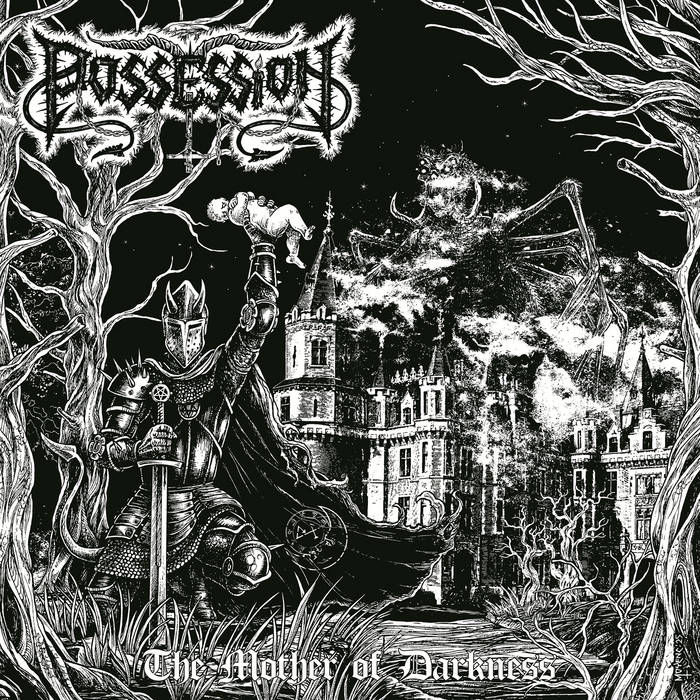
Some ten years ago, Possession was the top focus of the Belgian extreme Metal world. Obviously, the country has produced some fine Black Metal over the decades, but the times of Ancient Rites and Enthroned were long gone when Possession started to make a name for themselves. In a way, the Black/Death amalgam of their debut demo ‘His Best Deceit’ reinvigorated the scene. Backed by Extreme Metal stalwart labels Iron Bonehead Productions and initially also Invictus Productions, the bands further released the ‘Anneliese’ and ‘1585-1646’ EPs before the release of their debut album ‘Exorkizein’, an album that even drew high acclaim from the Darkthrone’s Fenriz. However, even though a few split releases followed, Possession faded away into silence, making way for bands with similar influences like Heinous and Dikasterion, but even more so, the rise of the ancient Black Metal bands under the banner of Medieval Prophecy Records. It is in this light that relatively out of nowhere, some nine years after their debut album, the band releases the long-awaited sophomore record, ‘The Mother of Darkness’.
Back at the time of their first releases, Possession stood out for their mix of Death and Black Metal that leaned back to the earliest foundations of those genres. The band captured the spirit of the formative years of the genres, times where German Thrash and the South American violence from the 80’s were a noticeable part of the sound. At times merciless and pummeling, but with a strong dose of groove and more brooding sections, in particular that first Demo had a wild spirit with a volatile and violent intensity. Part of those foundations still remain on ‘The Mother of Darkness’, but certainly on the newest album the band tries to mix things up a little bit.
Much of the aggression of the record comes from the rhythmic section. While not quite bestial, the Black/Death amalgam of songs like ‘Graveside Prayer’ certainly nods to bands like Blasphemy and Sarcófago in the choppy relentless drums. The bass has a violent buzz to it, drawn to the front by the somewhat cleaner and lower-tuned sound that the band has employed since the very first recordings. Meanwhile, the main guitar riffs are deliberately more repetitive than on for instance ‘Exorkizein’, aimed to deliver a more ceremonial approach. Combining with plodding bass and frantic drums into a dense wall, it forms a basis that allows within each of the songs for more open guitar leads to emerge. Thus, the variation is more to be found in emerging themes and a more diverse range of vocals, and less in alternating between groove and rage as on the previous recordings.
The structure allows to quite quickly hook into the songs, giving them a sense of recognition and catchiness which is certainly one of the biggest qualities of the band. But especially the first three full tracks follow a bit of a too similar trajectory. For me, the album really opens up around ‘Exulted Hearts’, a more midtempo groove-oriented experience that is a bit more dynamic in riffs and tempos. The lower pace has a restlessness that makes it one of the highlights of the album, heavy, violent yet catchy in the nature of the band’s earliest work. It seems to reflect on the subsequent ‘Cry-Shine-Die’, which similarly is a bit more dynamic, and the bass intro is just an excellent way to get your blood pumping for the track. With an increasing tempo along with the welcome whammy solos, the song has a wilder, more escalating and temperamental nature. It carries over in the spirited shrieks and blasting of the title track, again one of the stronger, more convincing tracks of the album. While the band maintains a consistent quality between all tracks, these three stand out with head and shoulders due to their more individual nature.
No doubt those that have been waiting anxiously since ‘Exorkizein’ will be more than pleased with ‘The Mother of Darkness’. However, a pitfall that the band doesn’t entirely manage to avoid is that the album can sound quite formulaic, with the repetition of the guitar riffs, chopping drums and emerging leads as common elements. Personally, I prefer the more unpredictable nature of ‘His Best Deceit’, if only because this music to me still works best on a shorter format.